
Reference screening machines for electronic scrap
This recycling project at Immark shows the decisive influence that precise classification, fine fraction screening and material feeding have on the quality of the end product in electronic scrap processing.
The SPALECK screening and conveying technology used processes the electronic scrap in such a way that downstream sorting systems can process unmixed fractions very efficiently.
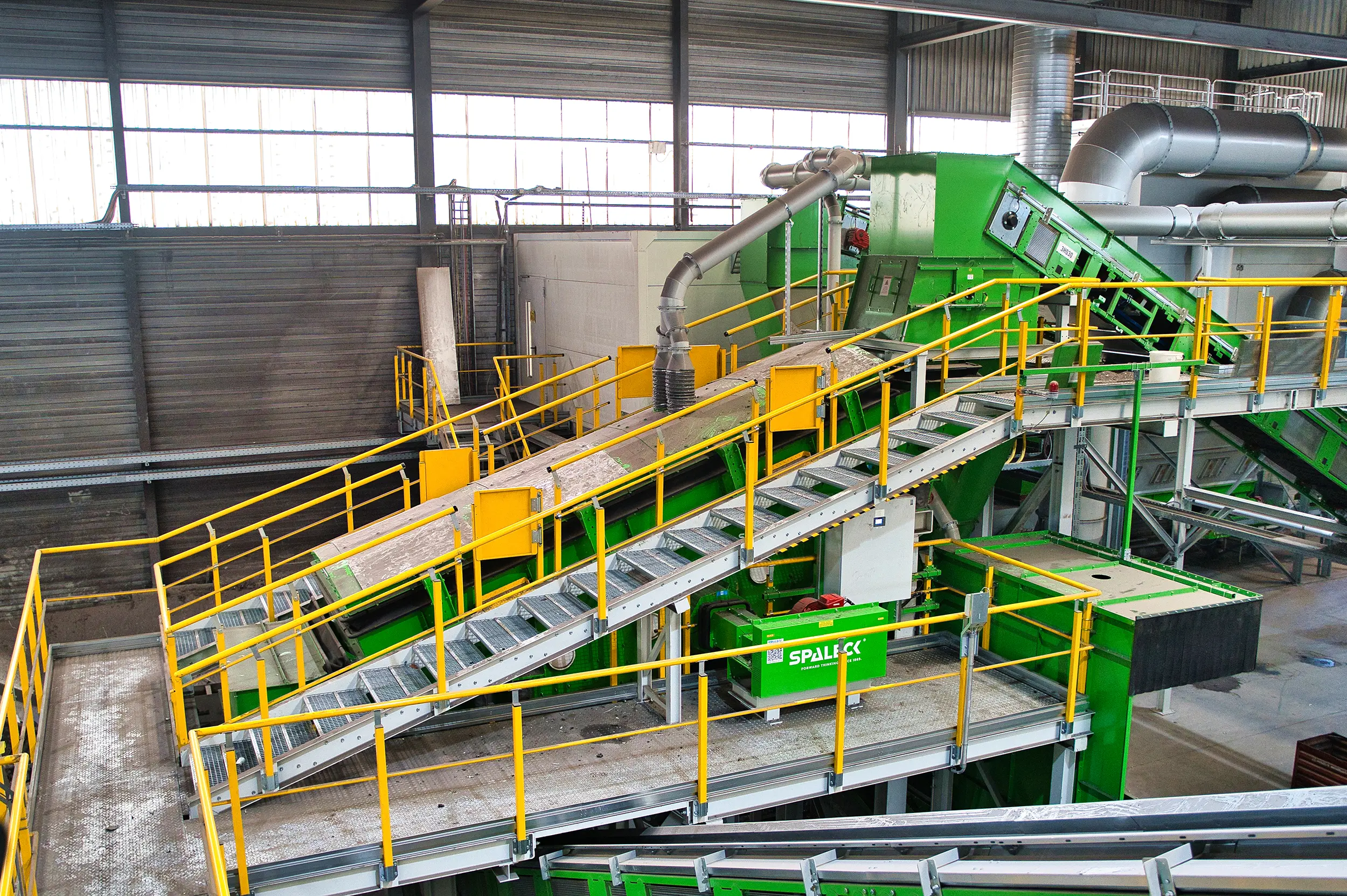
Switzerland is home to one of the world’s most modern processing plants for electronic scrap, with a focus on high material purity and maximum efficiency and Efficiency.
Immark AG, Regensdorf (Switzerland)
Electronic waste recycling
Electronic waste and waste electronic equipment
Fully automatic WEEE processing
Optimized material preparation for sensor-based sorting devices through Screening process and feeding
IN USE
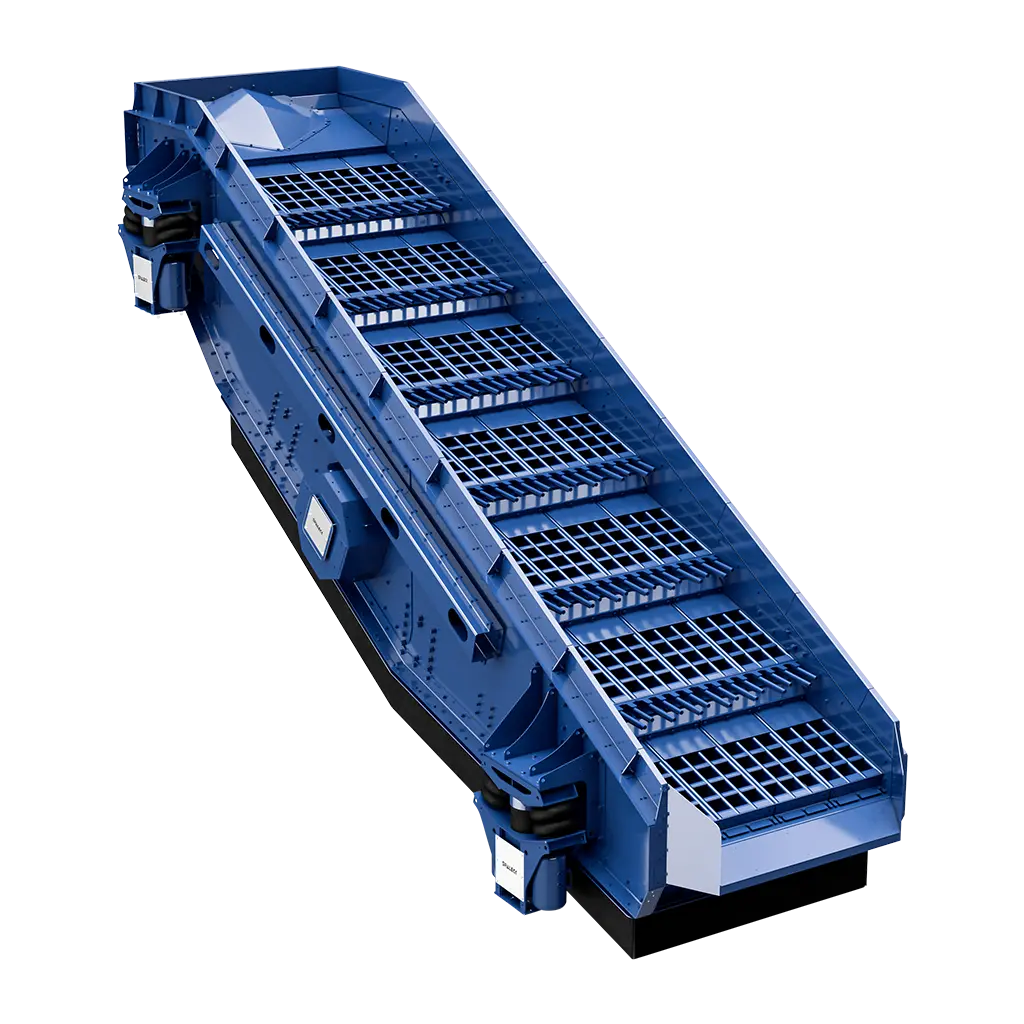
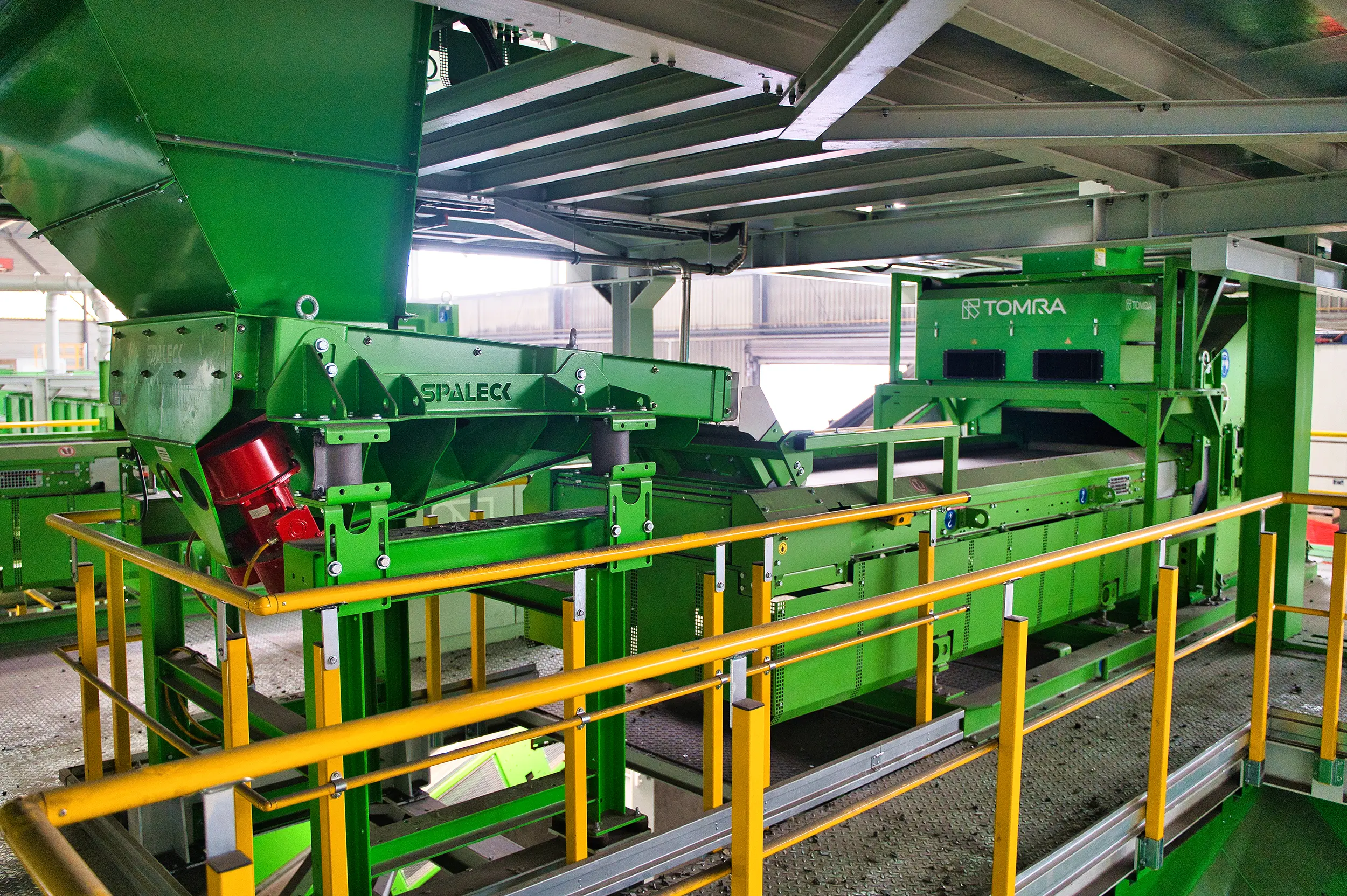
The vibrating screen performs the first classification. The machine is designed with a very easily accessible housing. The screen linings are optimized for electronic scrap.
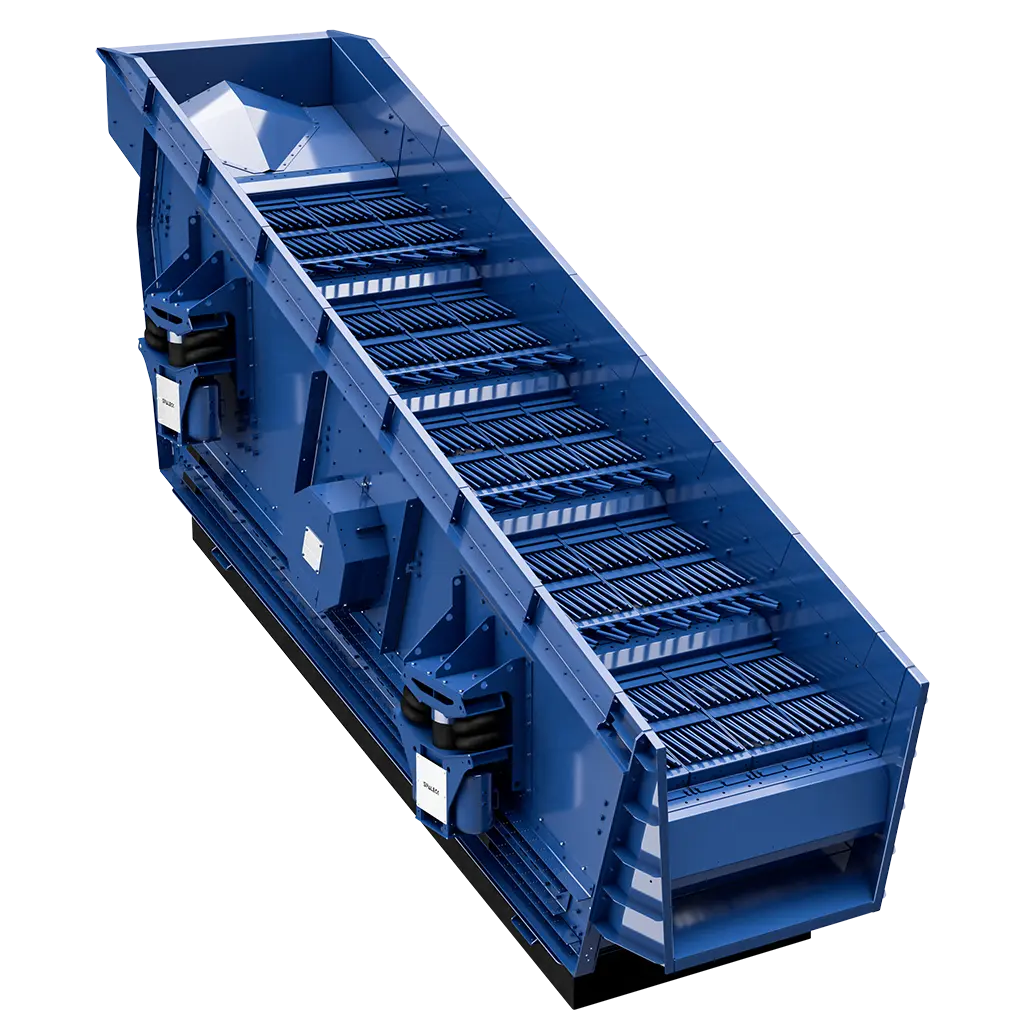
High throughputs with exact Screening sizes. The SPALECK 3D COMBI with its cleaning-optimized screen decks and flip-flow screen mats in the lower deck classifies the material for sorting.
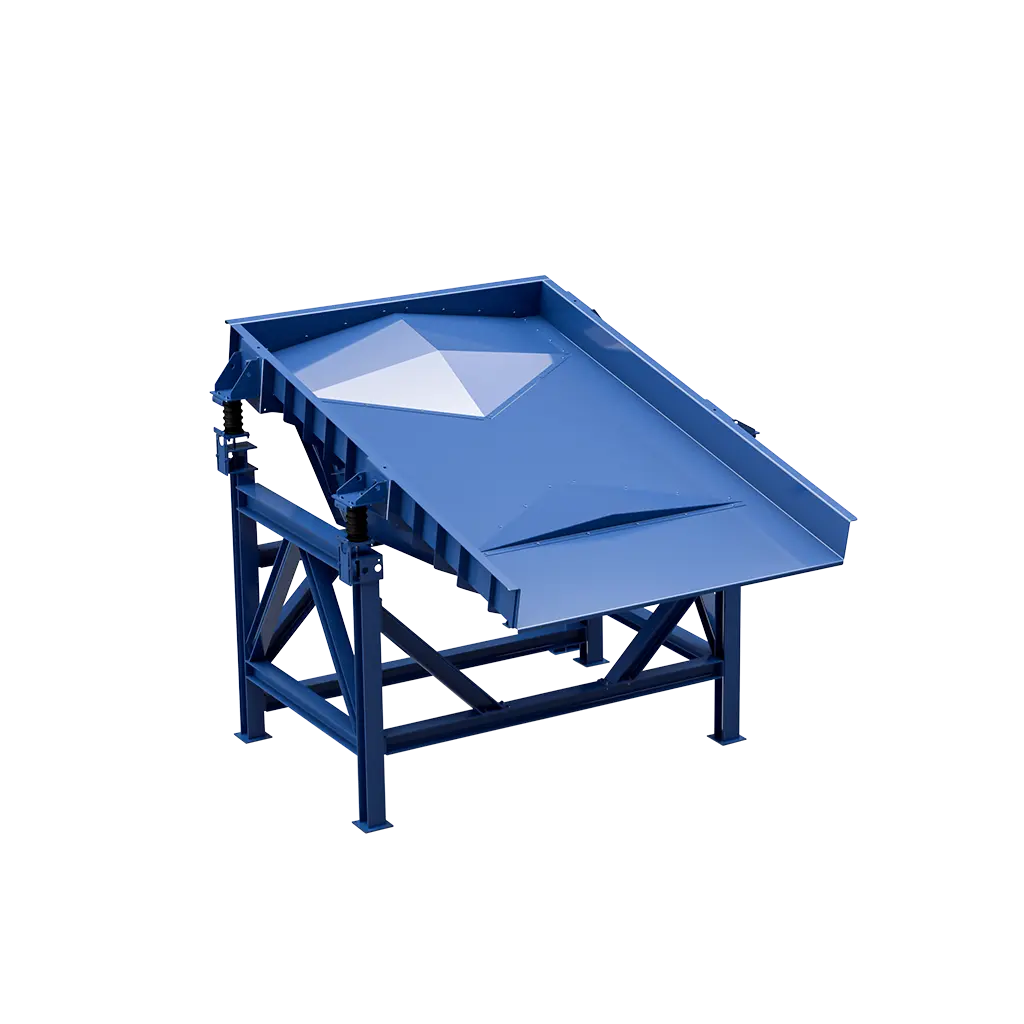
SPALECK tension conveyor troughs perform an important job in the sorting of e-scrap: they feed the material to the sorting devices. To do this, they level it and feed it into the sorting device at the optimum feed width.
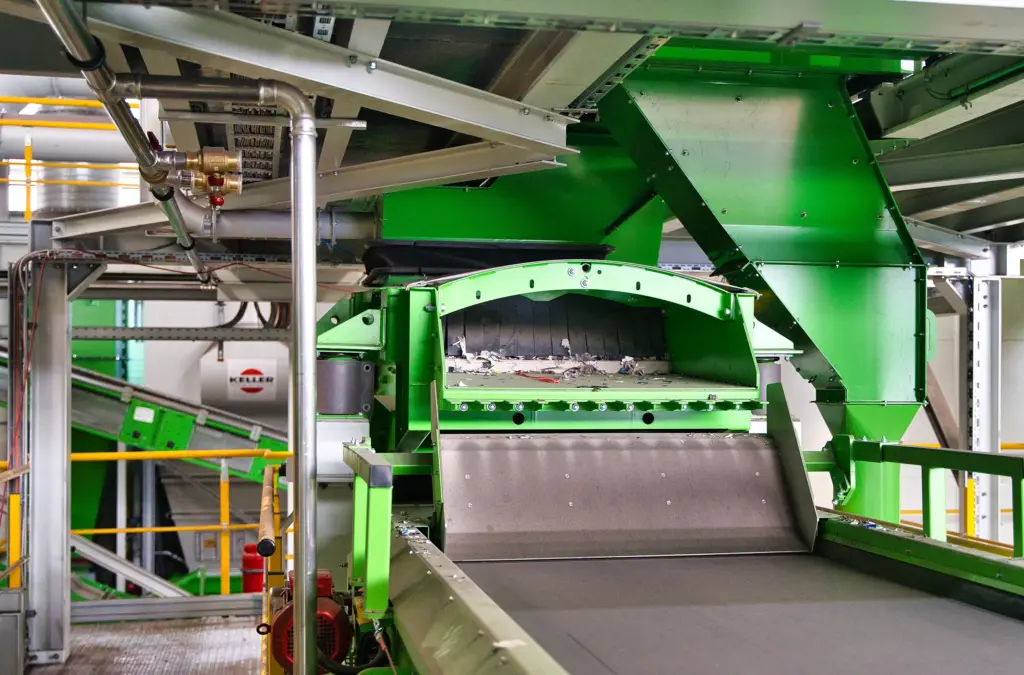
This special solution has one aim: to sieve off any remaining fine material before it is fed into the sensor sorting system. The result: clean belts, clean sorting and optimized sorter performance.
Electronic waste is a highly complex material stream with widely varying material properties. Different device classes, designs and material composites must be reliably recycled – from circuit boards and cables to housing parts and metal composites.
After shredding, a mixture with different Particle sizes and material densities is produced that is challenging in terms of process engineering. Typical components are non-ferrous metals, plastic-containing fractions, circuit board parts, cable and wire remnants as well as a mix of fines consisting of glass, sand and impurities that should not be underestimated.
Without targeted classification and separation of fines, this leads to specific problems in the further Recycling process:
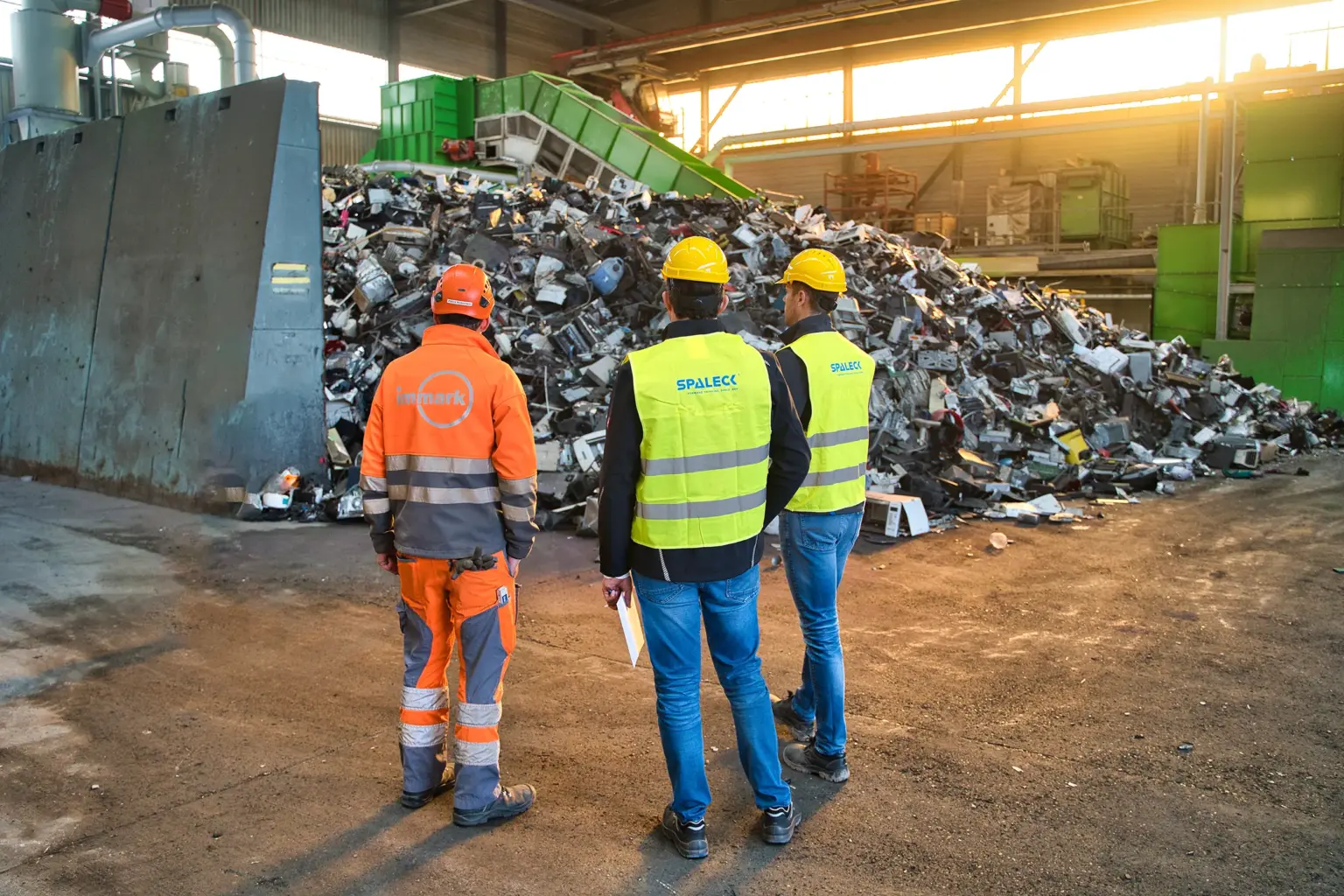
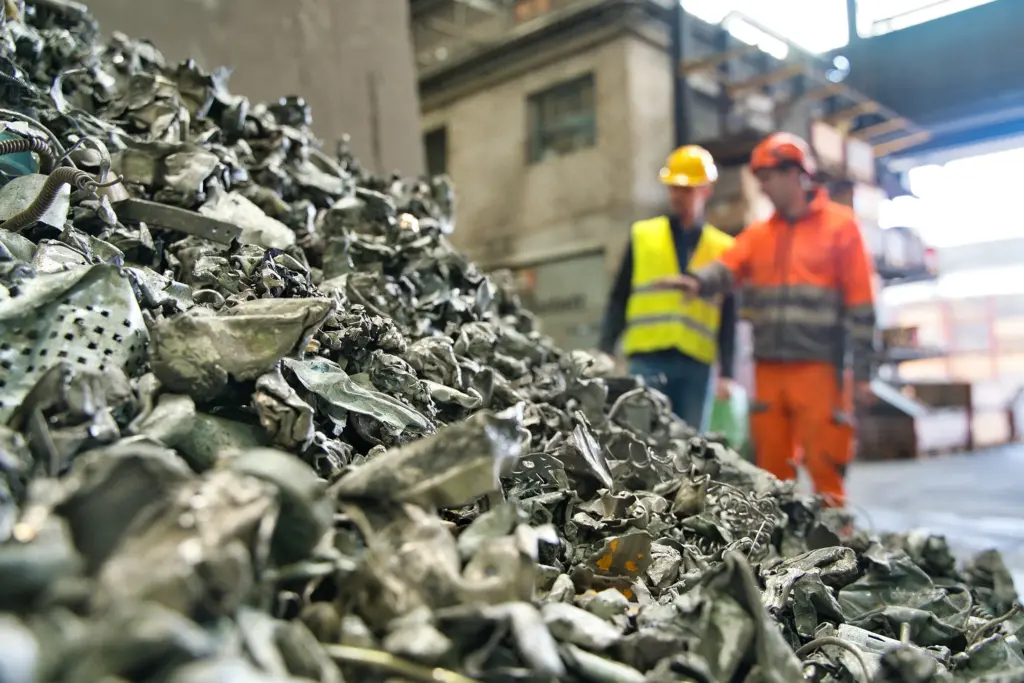
For Immark, the focus was on processing the shredded material using screening machines so that the sorting devices could sort it under optimal conditions. The aim was to produce clearly defined fractions from the very heterogeneous WEEE material flow and to prevent impurities such as dirt or long parts.
The video shows how Immark and SPALECK worked together from project development, through extensive screening tests in the SPALECK TestCenter, to the optimal solution for e-waste processing.
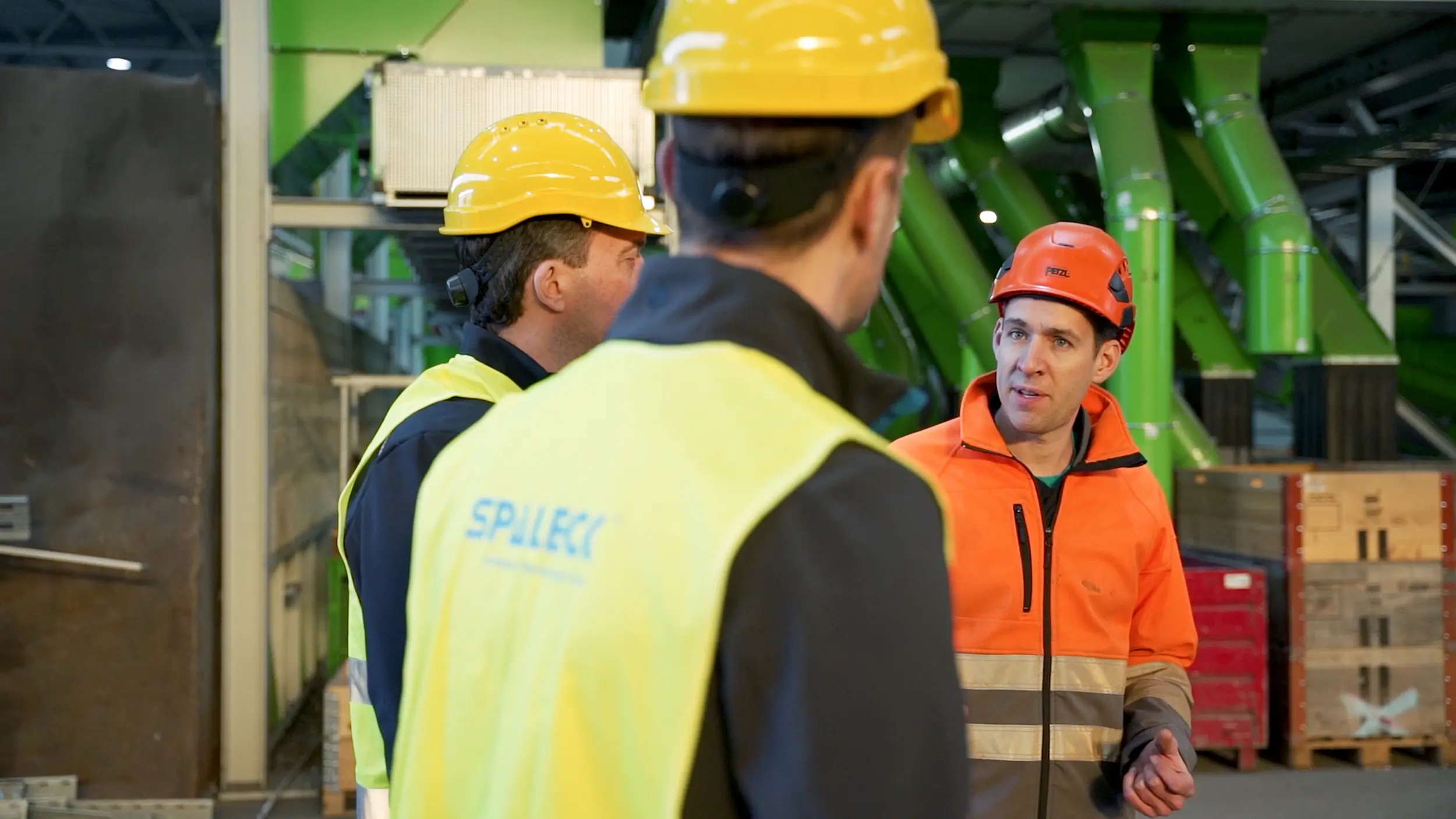
Precise classification, reliable fine particle screening and optimized material feed
SPALECK, Germany
Immark AG, Switzerland
TRANSFERABILITY for your preparation
Immark’s project shows how strongly the quality of sorting depends on the upstream material preparation.
In metal recycling and WEEE recycling in particular, the combination of classification (Screening process), targeted separation of fine particles and defined material feed determines how efficiently and reliably the sorting technology used can detect the recycling material and sort it into its individual components.
Extensive screening tests in the SPALECK TestCenter enabled the optimum Machine configurations to be determined and validated in advance.
The recycling technology used is transferable to applications in which heterogeneous material flows are prepared for eddy current and sensor-based sorting:
Would you like to find out more about our screening machines for Electronic waste? Or perhaps you are planning a new project and would like to carry out extensive screening tests with your material free of charge? Then let’s talk about your material now. I would also be happy to show you further references for SPALECK screening machines in electronic scrap processing.


Do you have a project idea, need more information about a screening machine or want to test your material in the SPALECK Test Center? We will be happy to help you at any time!
Which Screening technology is suitable for your electronic scrap can be reliably determined based on your specific material and the planned process. Decisive factors include particle size distribution, the fines content, the exact material composition and throughput requirements. On this basis, we develop an optimal design and are happy to test it with your material in the SPALECK TestCenter. Our screening machines for recycling Electronic waste are also highly customizable thanks to our ModularDESIGN+ concept.
Yes, you can view reference plants for electronic scrap with SPALECK Screening technology. We would be happy to organize a visit to existing plants so that you can get an idea of the processing and the screening quality achieved on site. We would also be pleased to invite you to screen your electronic scrap at our SPALECK TestCenter.
No, processing electronic scrap and metals such as SLF or ASR is no problem for SPALECK Screening technology. Our screening machines are configured to reliably handle different Material flows and similar applications. We determine the exact machine setting with you in advance.
The screening machine is designed to fit perfectly into your planned Electronic waste processing plant. SPALECK screening machines are individually tailored to your material, throughput and process control. We take into account interfaces, installation situation and conveyor technology so that simple integration into your system is possible. It also happens that plant operators replace non-brand screening machines with SPALECK screening machines in an existing plant. This is usually not a problem either.
Yes, you can test your electronic scrap in advance on SPALECK screening machines. In the SPALECK TestCenter, we carry out tests with your original material on two complete Recycling lines and thus analyze under real conditions which Separation sizes and screening machine design is optimal for your application. This provides you with a reliable basis and you can also use the screened material for further tests, e.g. with sorting machines. The tests in the SPALECK TestCenter are free of charge for you.
SPALECK Screening technology improves sorting performance in Electronic Waste recycling by Classifying (i.e. Screening) the Material flow into defined Particle sizes and removing interfering fines. This produces clearly defined fractions with a specific particle size from an unscreened mixture with a wide range of particle sizes. The equally sized parts are then separated by material using sorting equipment. The same size helps the sorting technology to better detect the individual components.